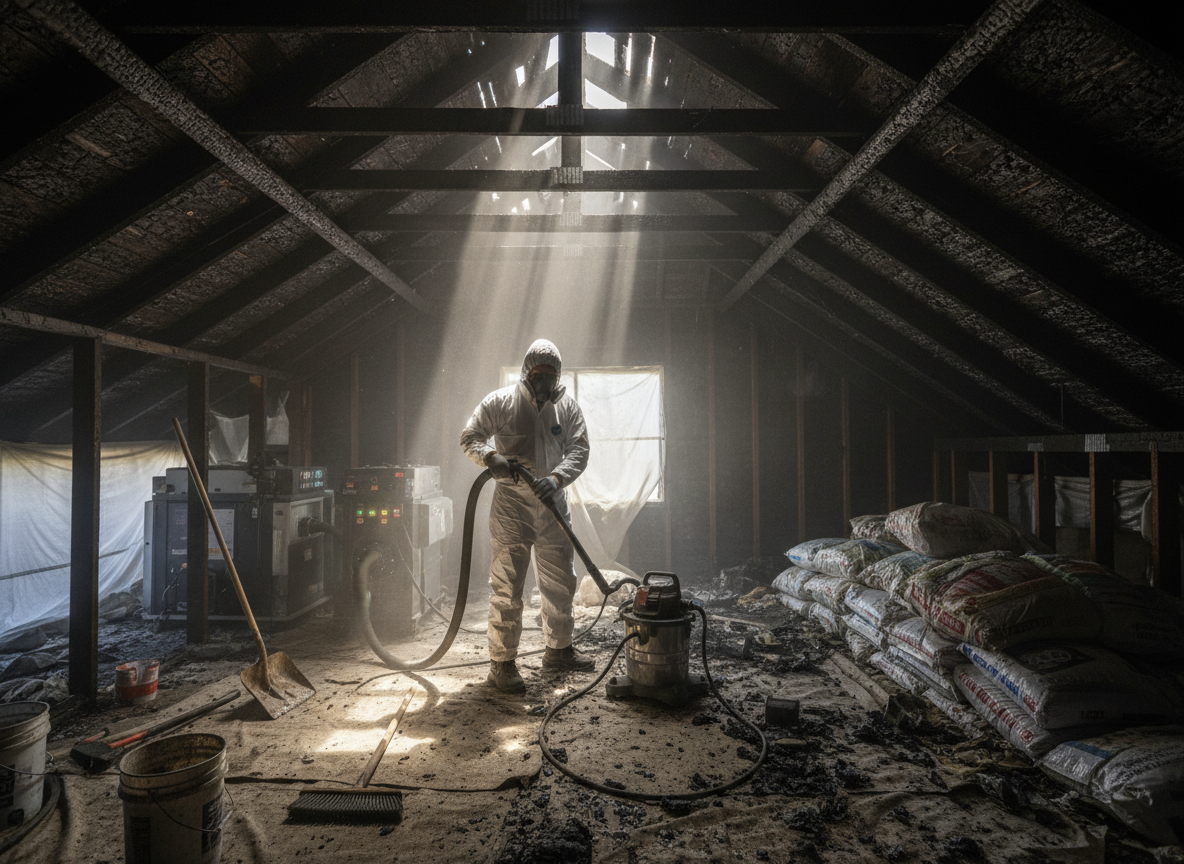
Attic fires in Mira Loma often start from electrical faults in older homes built before modern wiring codes took hold in Riverside County. These blazes spread quickly through fiberglass batts and cellulose insulation common in single-story ranch houses near Downtown Mira Loma. Hot desert summers push attic temperatures above 130 degrees, baking soot into rafters and making odor removal more difficult once crews arrive. Homeowners in Wine Country properties face added challenges when embers travel through ridge vents into dry brush zones. Proper containment requires sealing HVAC returns before any demolition begins to prevent cross-contamination into living spaces.
Restoration crews must account for the lightweight truss construction found in many Eastvale and Ontario border homes, where charring can compromise load paths without visible sagging from below. After suppression, negative air machines run for days to pull acidic smoke particles from OSB sheathing before new insulation can be installed. Skipping this step leads to recurring odors during the next heat wave. Access is frequently limited to pull-down stairs in narrow hallways, forcing technicians to cut additional openings that later require matching roof deck repairs to maintain wind load ratings.
Edge cases include hidden knob-and-tube wiring still present in some 1950s Mira Loma Park area homes, which can reignite if disturbed during debris removal. Crews test for this before any insulation extraction and coordinate with electricians for full replacement when discovered. Soil conditions in the region also matter; alkaline dust tracked in during summer work can react with charred wood residues, creating surface etching that shows up months later on finished ceilings.
Technician insight
In Mira Loma, the thing that catches most people out with attic fire restoration is how the extreme summer heat bakes soot deep into cellulose insulation in pre-1980 homes near Downtown Mira Loma. Homeowners often try to clean it themselves and end up pushing acidic particles into the drywall below, which then requires full ceiling replacement once temperatures spike again.
Attic Fire After Electrical Fault
Problem: Smoke from an attic fire in a 1970s Mira Loma home spread through the HVAC into living areas. What we found: Charred trusses and heavily contaminated cellulose insulation that had absorbed suppression water. What we did: Sealed returns immediately, removed all insulation, treated rafters, and replaced damaged sections before reinstalling R-38 batts rated for desert conditions. Outcome: Home passed air quality testing and was returned to the owners within ten days.
How it works
- 1
Initial Assessment
Technicians arrive 24/7 from the Limonite Ave location and inspect truss integrity, insulation type, and smoke migration paths through the home's HVAC system.
- 2
Containment and Safety
Plastic barriers and negative air are set up to isolate the attic while checking for hidden electrical hazards common in older Mira Loma construction.
- 3
Debris and Insulation Removal
Charred materials are extracted and disposed of, with extra attention to cellulose that can hold moisture from suppression efforts during hot summer months.
- 4
Odor Neutralization and Repairs
Thermal fogging and ozone treatments address embedded smoke, followed by structural repairs to rafters and sheathing before new insulation installation.
- 5
Final Clearance
Air quality testing and visual inspection confirm the space is safe, with documentation provided for insurance claims on Riverside County properties.
Pricing
Pricing varies based on attic size, extent of charring, and whether additional roof access points are needed in older Mira Loma homes.