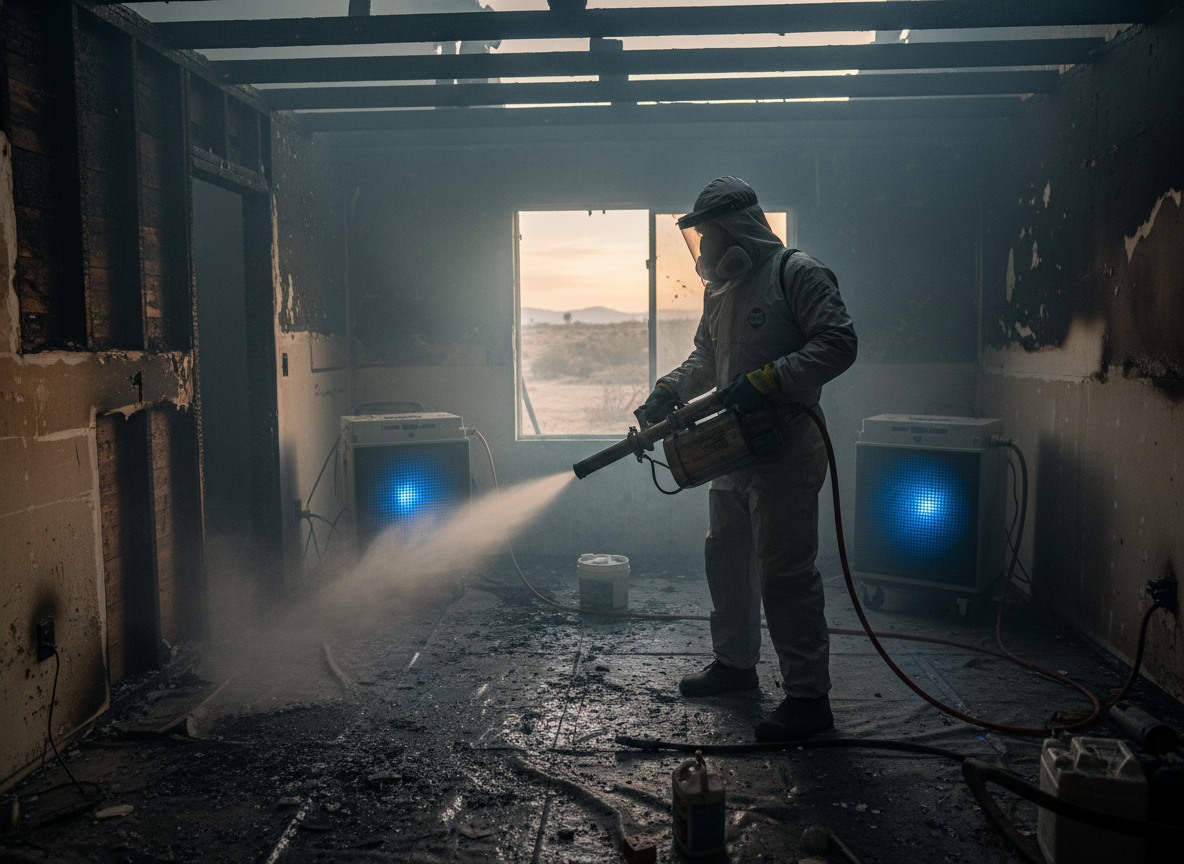
Smoke from structure fires in Mira Loma settles into the porous stucco and older drywall common in Downtown Mira Loma homes built before 1990. Hot desert summers push temperatures above 100 degrees, forcing HVAC systems to run constantly and pulling odor molecules deeper into ductwork and insulation. Standard cleaning leaves residual smells that return once the first Santa Ana wind event hits. Proper odor removal requires thermal fogging or hydroxyl generators calibrated to the home's square footage and the specific fuel load that burned, whether wood framing or synthetic furnishings common in Eastvale tract homes.
We map odor paths starting at the fire origin and moving through shared walls into adjacent rooms, paying special attention to attics where Mira Loma's dry climate keeps soot airborne longer. Concrete slab foundations in many Riverside County properties trap moisture under flooring after suppression efforts, creating ideal conditions for musty secondary odors to develop weeks later. Our process includes sealing and treating subfloor cavities before reinstalling finishes so the smell does not migrate back into living spaces once summer heat returns.
Homeowners in Wine Country properties often discover that cedar closets and wine storage rooms retain smoke long after the main living areas test clean. We use targeted air scrubbing and surface sealing rather than ozone, which can damage wine corks and labels. Every job includes post-treatment air sampling to confirm odor levels have dropped below detectable thresholds before we sign off.
Seasonal Considerations
Mira Loma's extreme summer heat accelerates off-gassing from treated surfaces, so we schedule final verification visits during the coolest part of the morning to avoid false negatives. Winter brings occasional inversion layers that trap odors indoors, requiring longer dwell times on hydroxyl treatments.
Technician insight
In Mira Loma, the thing that catches most people out with odor removal after fire is how the hot desert summers keep the AC running nonstop and pull smoke deeper into the old flex ductwork common in 1980s homes near Mira Loma Park. Homeowners clean the obvious surfaces then wonder why the smell returns the first 105-degree week.
Downtown Mira Loma Smoke Odor Lingering in Attic
A kitchen fire in a 1987 home sent smoke into the attic insulation. We found odor pockets trapped above the drywall because the dry climate had kept soot from settling. After removing contaminated batts and running hydroxyl treatment through the ducts for 48 hours, the homeowners reported no return of the smell even after the next heat wave.
How it works
- 1
Site Assessment
Inspect fire origin, map smoke migration through walls, ceilings, and HVAC in the specific Mira Loma property.
- 2
Source Removal
Remove charred materials and heavily contaminated insulation that continue releasing odors.
- 3
Air and Surface Treatment
Apply thermal fog or hydroxyl processing calibrated to the home's construction and local climate.
- 4
Verification
Conduct air sampling and sensory inspection after treatment, including attic and duct checks.
Pricing
Cost depends on square footage affected, depth of smoke penetration into insulation and ducts, and whether HVAC cleaning is required. Upfront quotes provided on site.