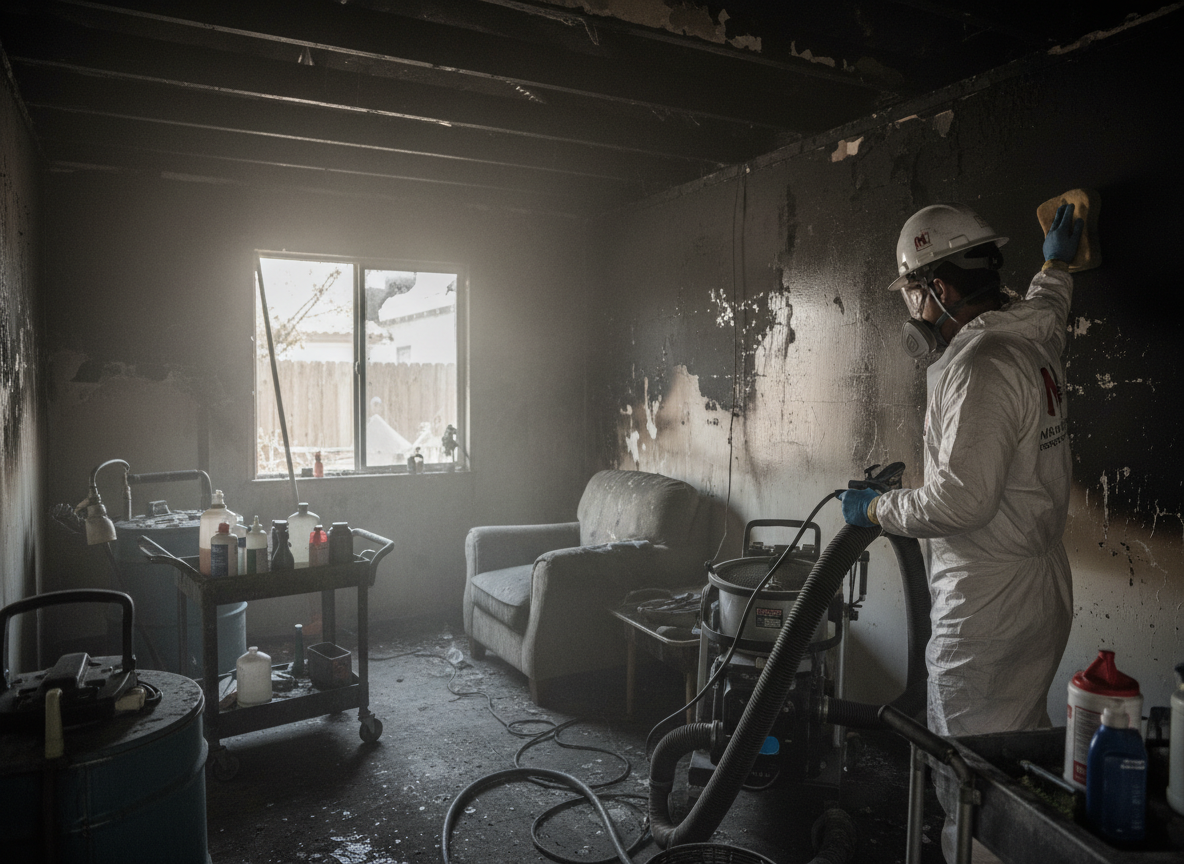
Smoke remediation in Mira Loma must account for the hot desert climate that pushes fine particulates deep into porous materials such as drywall, stucco, and attic insulation common in homes near Downtown Mira Loma and Mira Loma Park. Summer temperatures routinely exceed 100 degrees, causing resins to bake into surfaces and HVAC systems to circulate odors throughout the structure. Technicians begin by mapping smoke migration paths, paying special attention to older single-story ranch homes where unsealed joints and limited attic ventilation allow soot to travel farther than in newer Eastvale builds.
Standard wet cleaning fails on protein-based smoke from kitchen fires prevalent in Riverside County neighborhoods; instead, technicians rely on dry sponges, HEPA vacuuming, and pH-neutral degreasers followed by thermal fogging to neutralize odors trapped in Wine Country-adjacent properties. Edge cases include smoke that has entered wall cavities through electrical outlets or settled on concrete slabs, requiring removal of baseboards and targeted ozone treatment. Failure to address these hidden reservoirs leads to recurring smells when temperatures spike again.
Verification uses both visual inspection under UV light and air sampling to confirm particulate levels meet post-fire standards before reconstruction. Homeowners in Jurupa Valley and Ontario often discover that smoke has affected neighboring units through shared attics, requiring coordinated work across property lines. All steps are performed with 24-hour availability to limit secondary damage during the region’s frequent high-wind events that can reintroduce soot.
Technician insight
In Mira Loma, the thing that catches most people out with Smoke remediation is how our hot desert summers bake smoke resins into the older stucco and unsealed drywall found around Downtown Mira Loma and near Wine Country; standard cleaning leaves odors that return the first 105-degree day unless thermal fogging reaches the wall cavities.
Kitchen Fire Smoke in Jurupa Valley Home
Problem: smoke from a stove fire traveled through the HVAC into bedrooms. What we found: soot layered inside ductwork and settled in attic insulation of a 1980s ranch. What we did: sealed the system, performed dry cleaning and fogging throughout, then verified with air sampling. Outcome: odors eliminated and family returned without reconstruction delays.
How it works
- 1
Detailed Assessment
Technicians inspect every room, attic, and HVAC run in the Mira Loma property to map smoke travel and identify affected materials.
- 2
Containment and Protection
Plastic barriers and negative air machines isolate work zones to prevent cross-contamination to unaffected areas of the home.
- 3
Surface Cleaning and Deodorization
Dry sponging, HEPA extraction, and thermal fogging remove residues and neutralize odors embedded in drywall and insulation.
- 4
Final Verification
UV inspection and air testing confirm smoke removal before any reconstruction begins on the Riverside County property.
Pricing
Pricing varies with the volume of affected square footage, depth of smoke penetration into insulation and HVAC, and whether multiple Mira Loma homes share attic space.