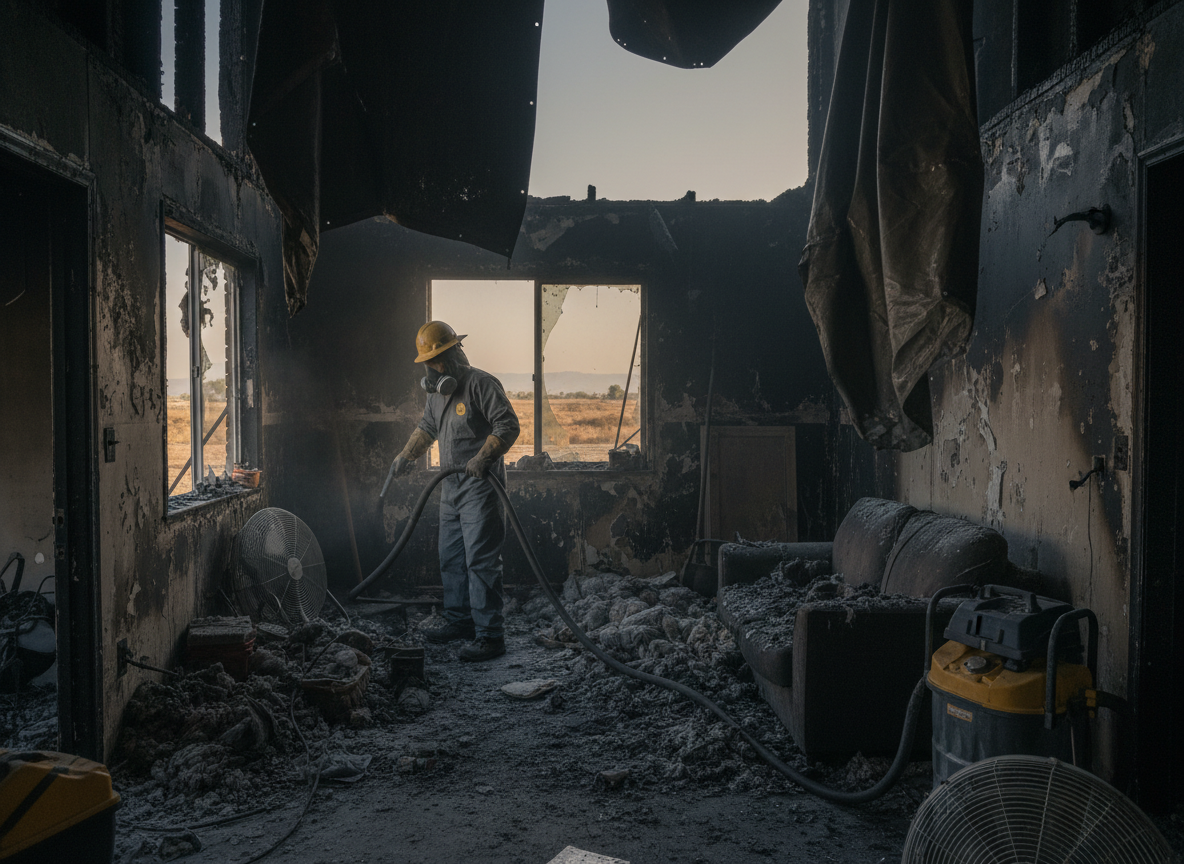
Fire damage clean up in Mira Loma requires careful removal of fine soot that settles into every surface after a blaze. The region's hot desert climate with very hot summers speeds up the bonding of smoke particles to drywall, carpet, and wood framing, especially in older homes common around Downtown Mira Loma. Technicians must address both visible char and invisible acidic residues that continue to corrode metal fixtures and HVAC systems long after the fire is out. Work often begins with negative-air machines to prevent cross-contamination into unaffected rooms while crews separate salvageable contents from items that must be discarded.
Properties near Mira Loma Park and along routes toward Wine Country frequently feature stucco exteriors and older single-story construction that traps smoke under eaves and in attic spaces. Riverside County building codes require documentation of all removed materials when structural elements are involved, so crews photograph layers of affected insulation and sheathing before disposal. Summer heat also means crews must work quickly to avoid re-wetting drywall that has already absorbed water from suppression efforts, which can lead to hidden mold if not dried properly within the first forty-eight hours.
Coordination with nearby cities such as Jurupa Valley, Ontario, and Eastvale is common when fires affect shared infrastructure or when residents need temporary relocation. Clean up teams test surfaces with pH strips to confirm neutralization of smoke acids before applying sealers, and they document every step for insurance adjusters who visit from across the county. Homeowners in these areas often overlook the odor that lingers in ductwork, so crews run separate cleaning passes through HVAC systems rather than treating them as an afterthought.
Technician insight
In Mira Loma, the thing that catches most people out with fire damage clean up is how the hot desert summers drive soot deep into the textured ceilings and popcorn finishes common in homes built near Downtown Mira Loma before the 1990s. Once temperatures climb, those particles bond fast and you end up chasing residue into layers you would never see in cooler climates.
Kitchen Fire Smoke in East Mira Loma Home
A cooking fire filled a single-story home near Mira Loma Park with heavy smoke that traveled through open ductwork. Crews found acidic soot coating every surface and inside the attic insulation. They isolated the HVAC, removed and cleaned all registers, then neutralized walls and ceilings before reinstalling insulation. The family returned after three days with no lingering odor.
How it works
- 1
Initial Assessment
Technicians arrive within hours, document all affected rooms, and test surfaces for soot depth and pH levels.
- 2
Containment Setup
Plastic barriers and negative-air machines isolate the work zone to keep particles from spreading into clean areas.
- 3
Soot and Residue Removal
Specialized vacuums, sponges, and detergents lift particles from walls, ceilings, and contents without spreading residue.
- 4
Odor Neutralization and Final Clearance
Air scrubbers and thermal fogging eliminate remaining smoke smell, followed by a final walkthrough with the homeowner.
Pricing
Upfront quotes provided after on-site inspection; final cost depends on square footage affected and extent of soot penetration.