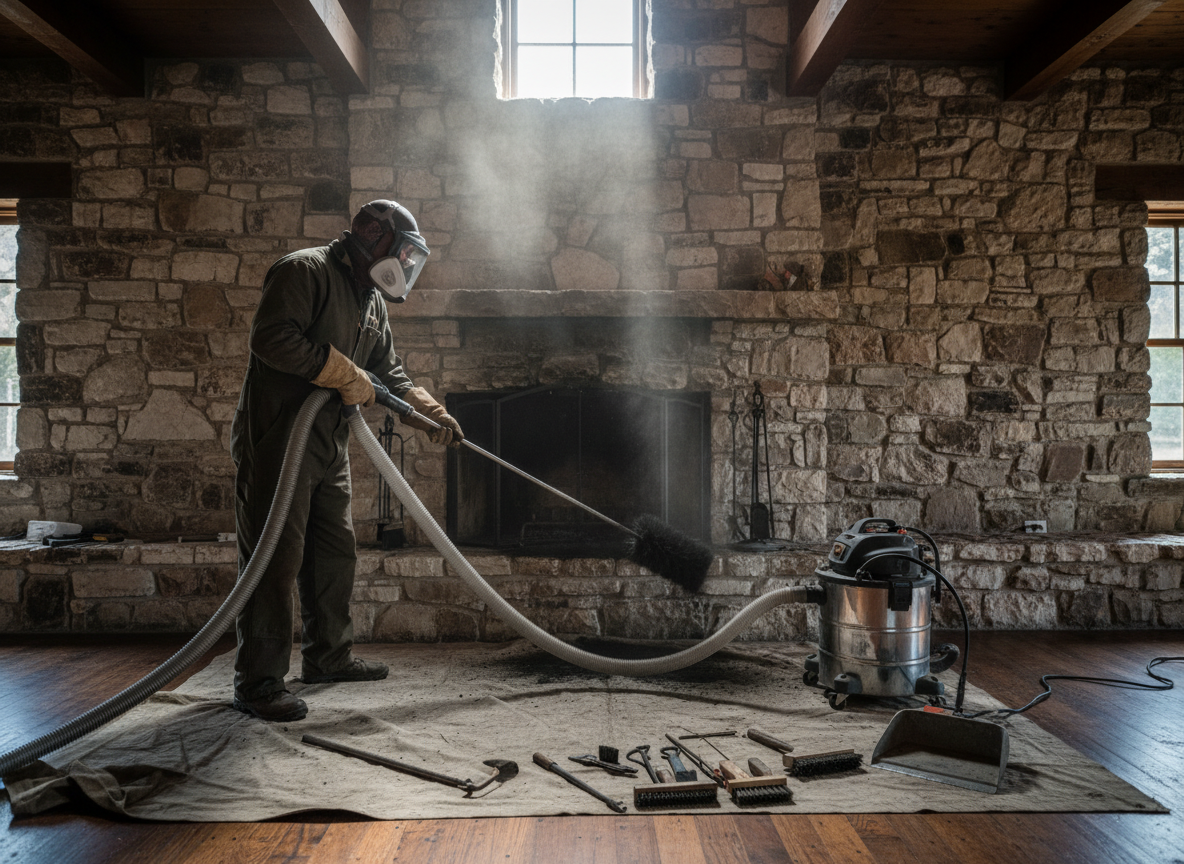
Soot from structure fires in Mira Loma settles quickly into porous materials like drywall, insulation, and wood framing common in homes built before 1980 around Downtown Mira Loma. Hot desert summers push temperatures above 100 degrees, which can bake soot deeper into surfaces and increase odor retention in attics and wall cavities. Technicians use HEPA vacuums, alkaline cleaners, and controlled demolition to remove residues without spreading particles to unaffected rooms. In Riverside County properties near Wine Country, smoke often travels through HVAC systems shared with nearby Jurupa Valley homes, requiring full duct cleaning to prevent recontamination.
Edge cases include soot on concrete slabs and tile in Eastvale-adjacent properties where alkaline residues from certain fires etch surfaces if not neutralized within 48 hours. Older Mira Loma homes near Mira Loma Park frequently have knob-and-tube wiring that complicates access, forcing selective removal rather than full wall demolition. Technicians test pH levels on surfaces before sealing to avoid trapping acidic soot that could corrode metal fixtures over time. Work follows Riverside County air quality guidelines to limit dust migration during removal.
Homeowners in Ontario and Eastvale often mistake visible soot for the full extent of damage, overlooking microscopic particles lodged in carpet padding and furniture foam. Proper removal requires negative air machines and staged cleaning to capture particles before they settle again in the dry Mira Loma climate. Skipping this step leads to recurring odors when air conditioning cycles on during peak summer heat.
Technician insight
In Mira Loma, the thing that catches most people out with Soot removal is how the hot desert summers bake particles into the drywall and insulation of pre-1980 homes near Downtown Mira Loma and Mira Loma Park, so a simple wipe-down fails and you end up reopening walls weeks later when the AC kicks on.
Soot in Attic After Kitchen Fire
A single-story home in Downtown Mira Loma had kitchen fire soot travel through ceiling vents into the attic during a 105-degree summer day. Inspection showed particles embedded in fiberglass insulation and on rafters. Crew contained the space, HEPA-vacuumed and treated surfaces, then replaced contaminated insulation sections. Odors cleared and the family returned without secondary cleaning calls.
How it works
- 1
Initial Assessment
Technicians inspect all affected rooms in the Mira Loma property, mapping soot migration through HVAC and attic spaces while noting material types.
- 2
Containment Setup
Plastic barriers and negative air units isolate the work zone to prevent soot from spreading to clean areas of the home or adjacent units.
- 3
Surface Cleaning
HEPA vacuuming followed by pH-adjusted solutions removes residues from walls, ceilings, and fixtures without damaging original finishes.
- 4
Final Verification
Post-cleaning inspection confirms particle levels meet clearance standards before contents are returned and sealing begins.
Pricing
Cost depends on square footage affected, soot penetration depth, and whether HVAC or contents require separate treatment.