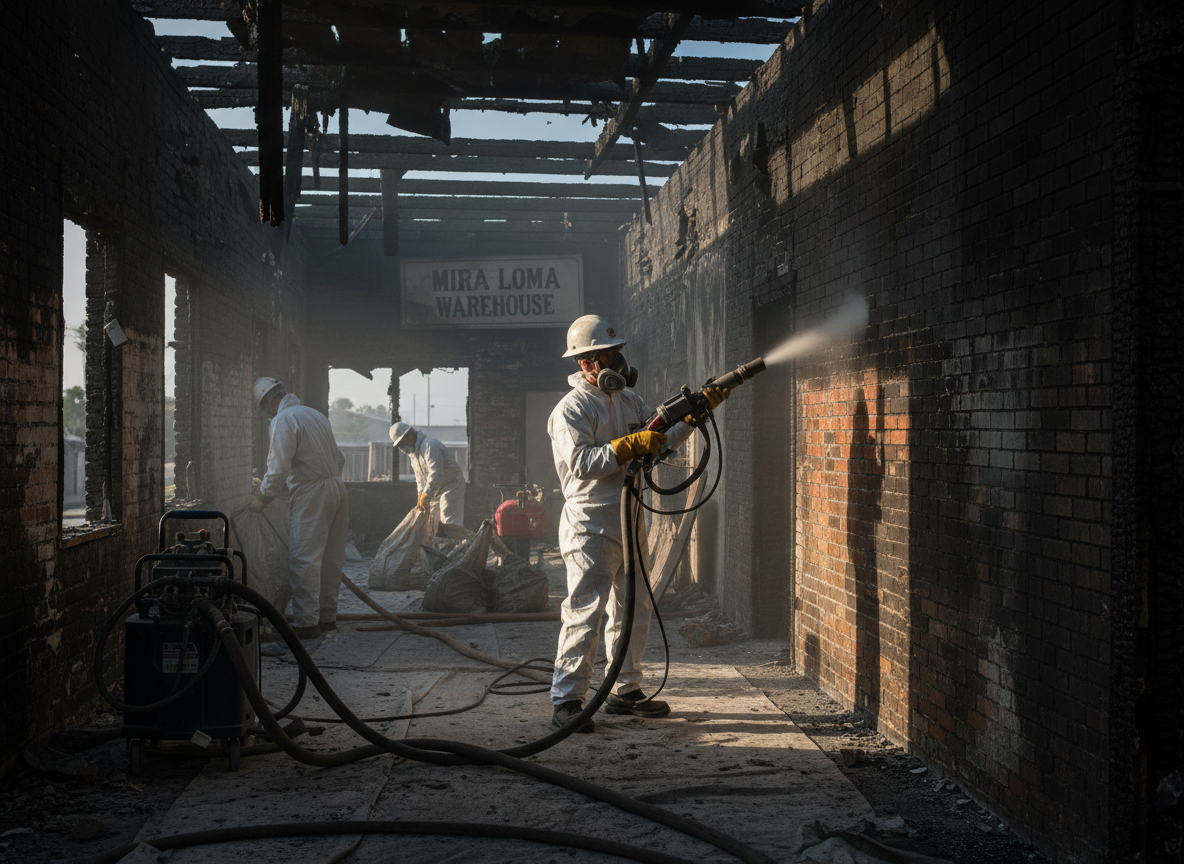
Commercial properties in Downtown Mira Loma often feature older steel-frame or masonry construction mixed with newer retail spaces near Wine Country. After a fire, soot penetrates HVAC systems and settles on inventory, requiring targeted air scrubbing and surface decontamination that accounts for the area's hot desert climate where high summer temperatures accelerate residue bonding to metals and fabrics. Crews must also manage rapid re-ignition risks from dry vegetation around Mira Loma Park and nearby lots in Jurupa Valley.
Restoration teams address edge cases such as hidden char in load-bearing beams common in Eastvale-adjacent warehouses and chemical runoff from extinguished fires that can affect soil near Ontario industrial corridors. Work follows Riverside County building codes for electrical and mechanical systems, with extra attention to fire-rated assemblies that may have been compromised. Delaying containment allows wind-driven ash from surrounding hills to re-contaminate cleaned zones within hours during peak heat.
Technicians use negative-air machines and HEPA filtration suited to Mira Loma's low-humidity summers, preventing moisture-related secondary damage that can occur when cooler nights follow extreme daytime heat. Inventory salvage decisions hinge on documenting smoke exposure levels before contents are moved, especially for food-service or retail tenants where odor retention voids usability.
Technician insight
In Mira Loma, the thing that catches most people out with Commercial fire restoration is how our hot desert summers let smoke residue bond fast to metal warehouse beams and rooftop units, especially on older buildings near Wine Country where wind carries ash from dry lots straight into open loading docks.
Retail Strip Fire Near Mira Loma Park
A fire started in an electrical panel of a retail strip in Downtown Mira Loma. We found heavy soot throughout the shared HVAC trunk serving three units plus char along roof joists. We isolated the system, removed affected duct sections, cleaned all surfaces with dry-media methods, and restored airflow within five days so tenants could reopen without lingering odor complaints.
How it works
- 1
Initial Assessment
Technicians inspect structural integrity, smoke migration paths, and HVAC contamination at the Mira Loma site while documenting damage for insurance.
- 2
Containment and Safety
Barriers and negative pressure are established to isolate affected zones and protect unaffected commercial areas from further soot spread.
- 3
Debris Removal and Cleaning
Charred materials are removed, followed by soot extraction from surfaces, ducts, and inventory using methods suited to desert-dry conditions.
- 4
Restoration and Verification
Repairs, odor neutralization, and final air-quality testing confirm the space meets commercial occupancy standards before reopening.
Pricing
Upfront quotes based on square footage, smoke depth, and HVAC scope; no two commercial jobs price the same.