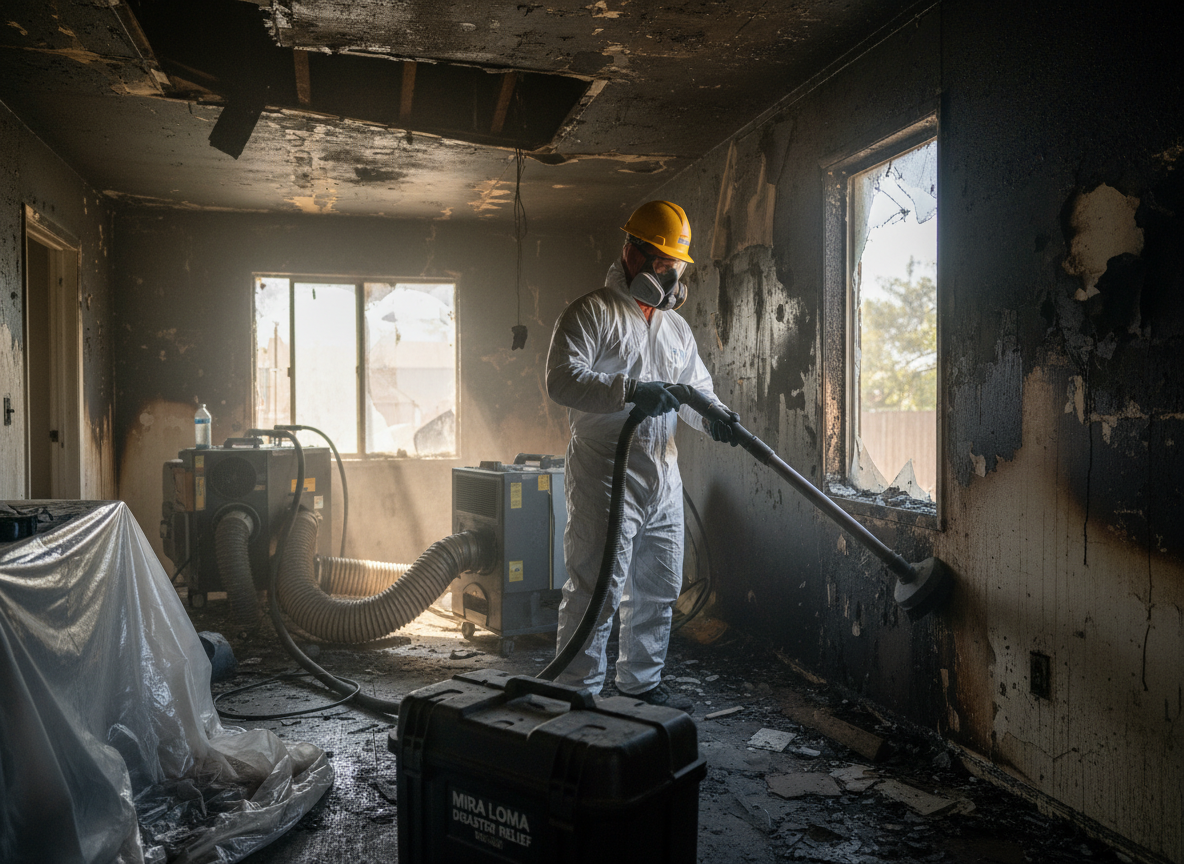
Mira Loma homes built from the 1960s through the 1990s often feature wood framing, stucco exteriors, and older HVAC systems that pull smoke deep into ductwork during a fire. Hot desert summers push temperatures above 100 degrees, which bakes soot into drywall and insulation, making simple wiping ineffective. Restoration crews must remove affected drywall sections back to clean studs and run negative air machines for days to clear lingering particulates before any reconstruction begins.
Wildfire smoke from nearby Wine Country or the Jurupa Valley hills frequently drifts into Eastvale and Ontario neighborhoods, leaving acidic residues on metal fixtures and concrete slabs. In Downtown Mira Loma, narrow lots mean equipment access is limited, so crews stage containment barriers at the street and use portable HEPA units rather than large truck-mounted systems. Homeowners who skip professional odor neutralization often notice the smell return during the next heat wave when pores in the stucco reopen.
Riverside County building codes require permits for any structural repairs after fire damage, and inspectors check that all charred framing is replaced rather than patched. Crews document every layer removed with photos because insurance adjusters in this area routinely question hidden damage claims. Working in 100-plus degree afternoons requires extra hydration breaks and shorter shifts to keep technicians sharp when handling hazardous materials.
Technician insight
In Mira Loma the thing that catches most people out with fire and smoke damage restoration is how the hot desert summers drive smoke deeper into stucco and older ductwork than they expect. A house that looks fine after a kitchen fire can still smell like smoke two weeks later once the afternoon heat pulls residues back out of the walls.
Kitchen fire in a 1980s Mira Loma home
Smoke traveled through shared ductwork into bedrooms. We found heavy soot inside the attic insulation and on the concrete slab edges. Containment and thermal fogging cleared the odor; new insulation and drywall were installed before the family moved back in.
How it works
- 1
Emergency Assessment
Technicians arrive within hours, document visible char and smoke migration, and test air quality inside the structure.
- 2
Containment And Safety
Plastic barriers and negative air machines isolate affected rooms while crews remove hazardous debris and secure utilities.
- 3
Soot And Odor Removal
Specialized cleaners and thermal fogging neutralize acidic smoke residues on surfaces and inside HVAC systems.
- 4
Structural Drying And Repairs
Dehumidifiers and air movers dry any water used during suppression, followed by drywall, insulation, and finish work.
Pricing
Pricing varies by square footage affected, smoke penetration depth, and whether structural repairs are needed; upfront written estimates are provided before work begins.