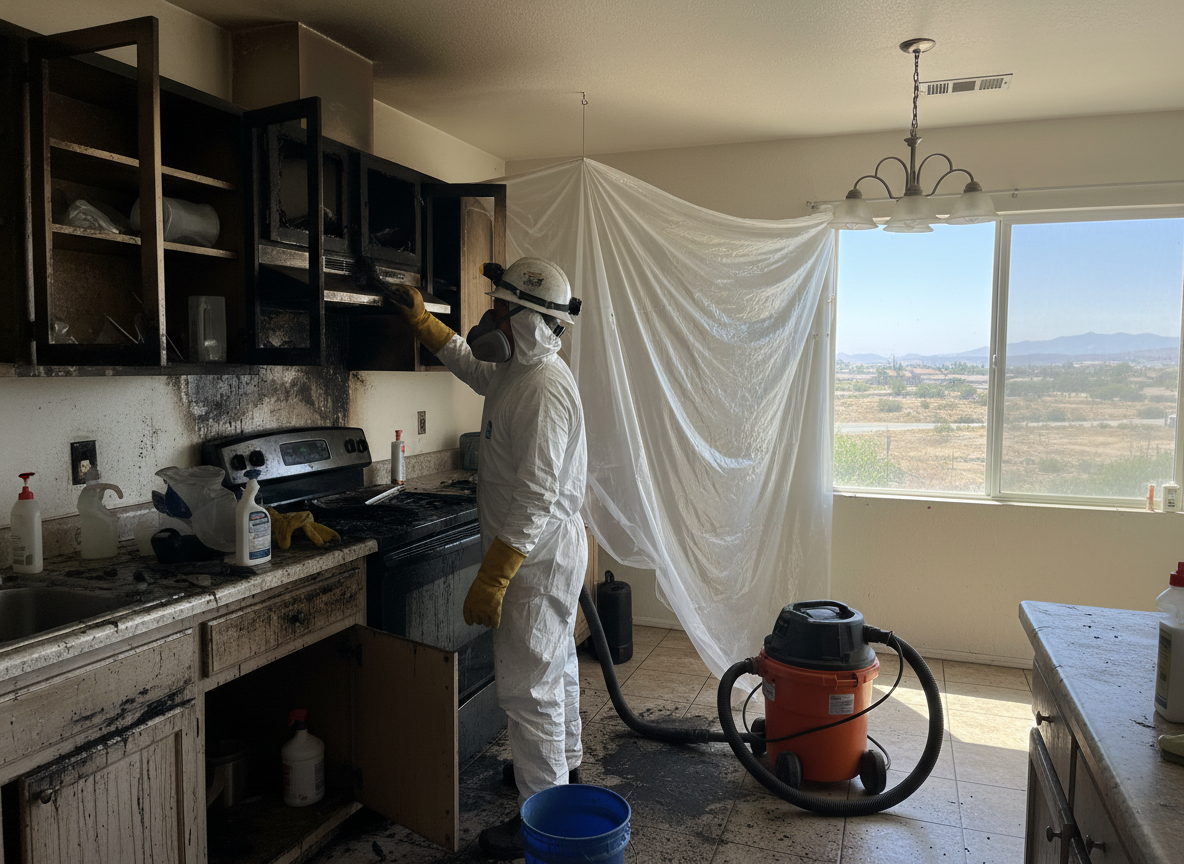
Kitchen fires in Mira Loma often start from grease buildup on stoves or electrical faults in homes built before 1990 in Downtown Mira Loma. Hot desert summers push indoor temperatures above 100 degrees, causing soot to bond tightly to drywall, cabinets and HVAC registers. Crews must remove porous materials like particleboard cabinetry quickly because residual heat and low humidity allow odors to re-emit days later. Containment barriers and negative-air machines are essential to keep particles from drifting into adjacent rooms near Mira Loma Park.
Smoke travels through shared walls and attic spaces common in Riverside County tract homes, reaching bedrooms and laundry areas far from the kitchen. In neighborhoods bordering Jurupa Valley and Ontario, older ductwork without modern filtration traps fine carbon that standard household vacuums cannot extract. Technicians use specialized alkaline cleaners on hard surfaces and HEPA air scrubbers to capture particles before they settle into carpet padding or insulation. Failure to address subflooring under vinyl or tile can leave lingering smells when humidity spikes during rare winter rains.
After a kitchen fire, wiring behind outlets and under cabinets must be inspected because heat can melt insulation without obvious charring. Local building codes in Mira Loma require permits for any electrical or plumbing work exposed during cleanup. Teams document hidden damage with moisture meters and borescopes before drywall removal to avoid disputes with insurers. Homes near Wine Country often have stucco exteriors that trap smoke on window frames and garage ceilings, requiring solvent-based cleaning rather than water-based methods that can drive stains deeper.
Technician insight
In Mira Loma, the thing that catches most people out with Kitchen fire cleanup is how the hot desert summers bake soot into older ductwork around Downtown Mira Loma so it keeps releasing odor every time the AC kicks on, long after the kitchen looks clean.
Grease fire in Eastvale kitchen
A cooking fire spread soot through the return vents of a single-story home near the Mira Loma border. Inspection showed carbon lodged in flex duct and attic insulation. Crews sealed the system, removed affected insulation, and ran HEPA scrubbers for three days until readings cleared.
How it works
- 1
Initial Assessment
Technicians arrive within hours, document the fire origin, test for hidden smoke in ducts and attic spaces, and identify materials that must be removed.
- 2
Containment and Safety
Plastic barriers and negative pressure setups isolate the kitchen while crews check for structural weakening and electrical hazards.
- 3
Soot and Residue Removal
HEPA vacuums, alkaline sponges and solvent cleaners lift carbon from cabinets, counters, floors and HVAC components without spreading particles.
- 4
Odor Neutralization and Final Clearance
Ozone or hydroxyl generators treat remaining smells, followed by air quality testing before homeowners return.
Pricing
Pricing depends on square footage affected, smoke travel into ducts, and whether contents require separate cleaning; contact for a same-day assessment.